Physical Address
304 North Cardinal St.
Dorchester Center, MA 02124
Physical Address
304 North Cardinal St.
Dorchester Center, MA 02124



Your available time lasts for exactly fifteen minutes. Your available time lasts for exactly fifteen minutes. You can finish a fat-burning workout which develops your cardiovascular endurance during the time needed to make a coffee and read your emails. The training method of rope jumping demonstrates its authentic efficiency which provides actual results.
I create fitness programs through data analysis instead of following established rules. My job as a fitness systems architect requires me to review scientific studies and conduct data analysis in order to develop effective training methods which suit the needs of busy individuals. The evidence from jump rope studies shows that this activity serves as an effective cardiovascular exercise which people can practice anywhere. The American Council on Exercise through MedicalNewsToday reports that jumping rope enables people to burn between 10 and 16 calories for every minute they practice this activity. The metabolic rate matches the energy expenditure of moderate running yet requires less time and space for completion.
The purpose of this program extends beyond nostalgic connections to childhood experiences. The program uses highly effective equipment for achieving weight loss and creating cardiovascular strength. The system requires us to start with a complete analysis.
Why would you add this simple tool and make its place permanent within data-driven training systems? The days of the numbers and physiological benefits are themselves telling.
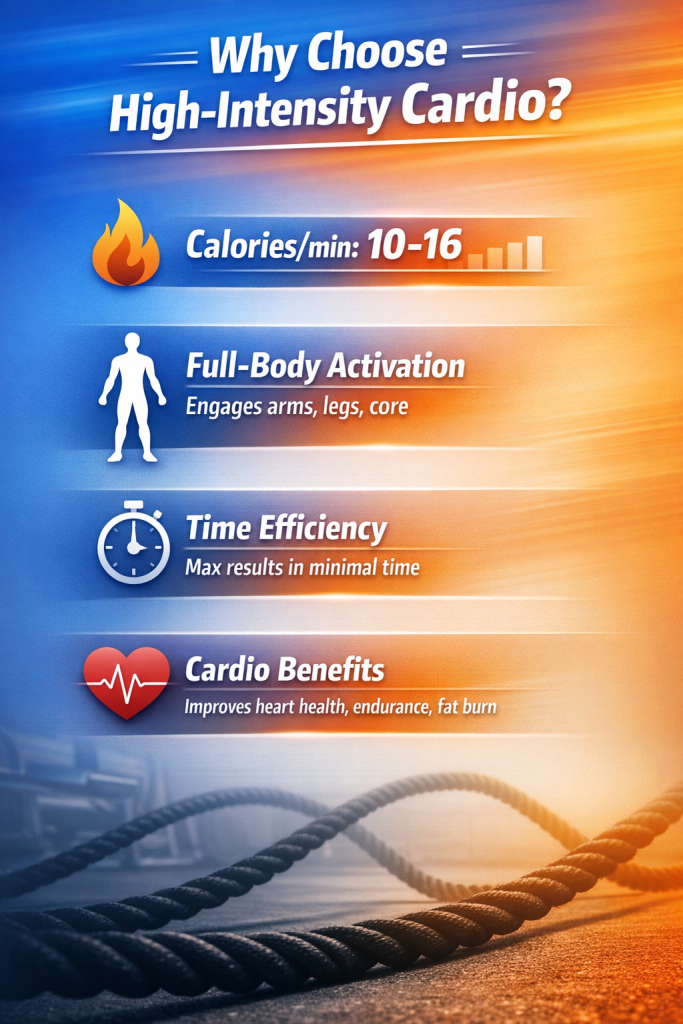
The most important resource we have which cannot be restored to us is time. The time we possess is fixed because we cannot create more of it. The training method which uses rope jumping demonstrates its best performance in this particular area. The calorie burn figures from Harvard Health Publishing and the ACE are compelling. The calorie burn rate for moderate rope jumping matches the running speed of a 10-minute mile. The rope allows you to reach vigorous intensity levels at a faster speed than other methods. You’re not pacing yourself for a long jog; you’re condensing high-energy output into a tight window. The workout creates an excess post-exercise oxygen consumption effect which causes your body to continue burning calories at a higher rate until you complete your workout. The metabolic boost provides a crucial advantage to busy professionals who want to lose fat.
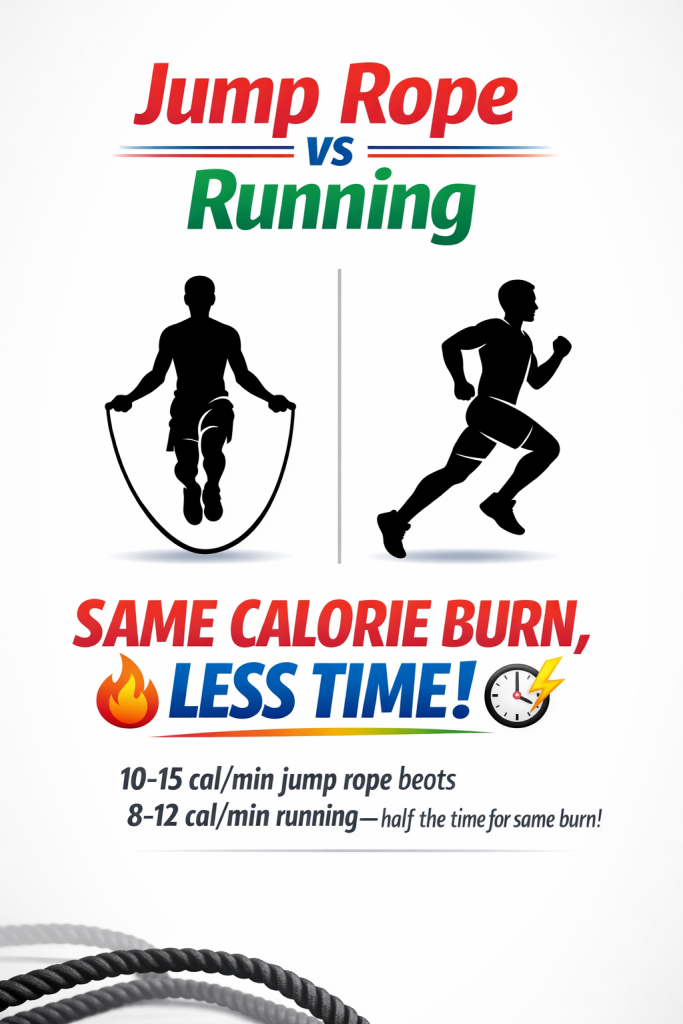
Time stands as our most precious resource because it cannot be regenerated. We must use our existing time resources to their fullest because we lack the capability to generate additional time. This type of training reaches its highest effectiveness through rope jumping exercises. The calorie burn figures from Harvard Health Publishing and the ACE are compelling. A person who jumps rope at a moderate speed burns the same calories each minute as someone who runs a 10-minute mile. The rope allows you to reach your maximum vigorous intensity level more quickly. You’re not pacing yourself for a long jog; you’re condensing high-energy output into a tight window. This workout method generates excessive post-exercise oxygen consumption (EPOC) which results in your body maintaining an increased calorie burn rate until you complete your workout. For busy professionals who want to lose fat this metabolic increase serves as their most valuable competitive advantage.
The main purpose of any cardio equipment exists to develop your most critical muscle which is your heart. Rope jumping training is exceptionally good at this. Research that appears on PubMed demonstrates that 10-minute jump rope sessions achieve vigorous intensity which is essential for developing cardiovascular endurance. Your heart becomes stronger while your lung capacity increases and your body develops better oxygen intake through this practice. The Mayo Clinic establishes that people who engage in regular vigorous exercise such as jump rope experience lower chances of developing serious health conditions which include heart disease and stroke and type 2 diabetes. Your every jump creates an investment into your future health.
People often ask me, “Is jump rope better than running?” As a systems architect, my response to such questions is, “It depends on your constraints and your goals.” Neither one is necessarily “better” than the other, but one may be more optimal in a particular situation. So, let’s look at the data.
| Metric 📊 | Jump Rope 🪢 | Running 🏃 |
| Calories Burned (per min) 🔥 | 10-16 (moderate-fast pace) | 10-16 (6 mph / 10-min mile) |
| Time Efficiency⏱ | High. Achieve max burn quickly. | Moderate. Requires longer duration. |
| Joint Impact 🦴 | Moderate-High (proper surface & form critical) | High (repetitive pavement impact) |
| Skill Requirement 🎯 | Moderate. Requires initial coordination. | Low. Intuitive for most people. |
| Equipment & Portability 🎒 | Extreme. Fits in a bag, needs minimal space. | Low. Requires shoes, open road/treadmill. |
The Insight: The benefits of rope jumping training include the ability to burn more calories per minute and the convenience of the exercise being portable. While running can be done on the go, it requires more time and space to achieve the same results as rope jumping.
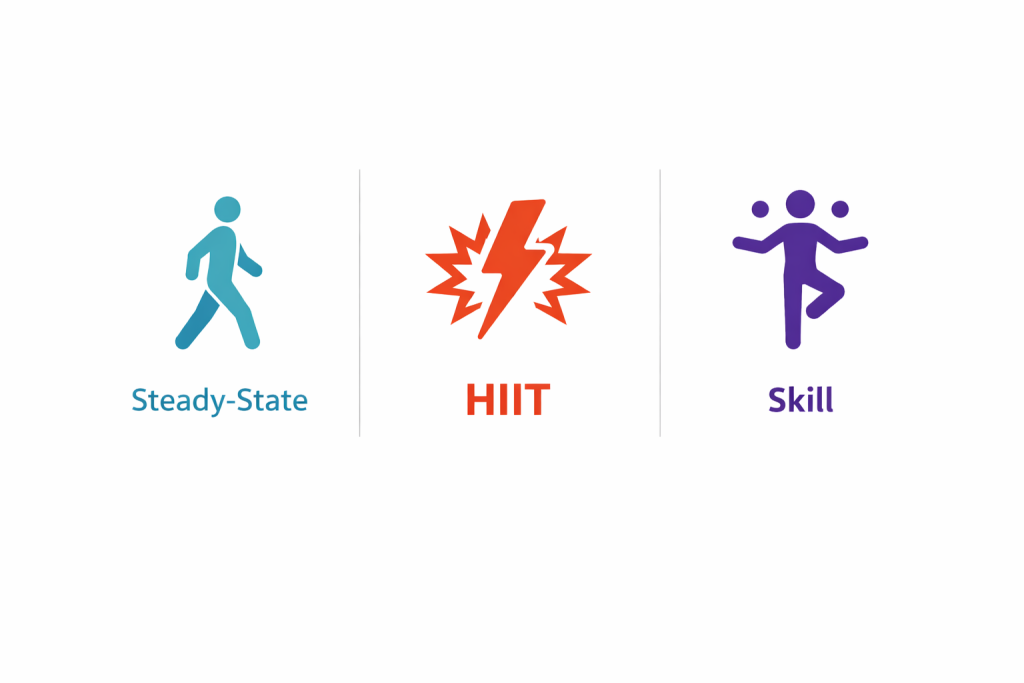
One thing that I think is important to consider in the design of a training system is scalability and jump rope does this beautifully, as the intensity can be modulated depending on the goal and fitness level.
This is the endurance foundation. It consists of continuous jumping at a steady, comfortable pace for an extended period (e.g.15-30 minutes). The primary focus is on enhancing aerobic capacity and training your body to use energy efficiently. It’s not about pushing your heart rate to the limit but rather maintaining a strong effort over time. This serves as a great base for beginners to develop coordination or for advanced athletes to recover actively.
This is where you will get the real fat-burning power of the rope jumping workout. High-Intensity Interval Training uses short periods of max effort followed by short recovery times. For instance, 30 seconds of jumping as fast as possible and then 30 seconds of rest. This method raises your heart rate to a very high level and creates a big metabolic disturbance, which brings much more afterburn effect (EPOC) than steady-state. Studies on PubMed have proved that HIIT protocols work great for improving cardiovascular fitness and burning fat in less time.
When you have the basic bounce down, you can turn on your brain and body more with skill work like the boxer skip (switching feet), double unders (two swings of the rope per jump) or criss-crosses. As Verywell Fit noted, a weighted rope will make your session a powerful strength-endurance workout by using your upper back and shoulders to a much greater extent. This type of work is perfect for breaking up monotony while developing athleticism.
Select your level:
Here is how you use the theory. These are progressions that the system has designed. Start where you are, not where you think you should be.
• Objective: Develop coordination and basic endurance.
• Protocol: 20-30 seconds of jumping, with a rest period of 30-60 seconds (marching in place or stepping side-to-side).
• Total Time: 10-15 minutes.
• Frequency: 3 times a week.
• Emphasis: Don’t concentrate on speed; instead, aim for clear, single bounces while finding the rhythm. If you stumble, just start over and keep going.
• Objective: Increase work capacity and introduce variation.
• PROTOCOL: 45 seconds work and 15 seconds rest, interspersing work periods with 30 seconds basic bounce and 15 seconds alternate foot skip (running on the spot).
• DURATION: 20 minutes, including a 3-minute warm-up and a 2-minute cool-down.
• FREQUENCY: 3-4 times per week. FOCUS: Maintaining form while adding slightly more complex movements and longer intervals.
• Objective: Maximize calorie burn and athletic performance.
• Protocol: A HIIT circuit.
• Set a timer for 20 minutes.
• Perform each exercise for 45 seconds, then rest for 15 seconds.
• Circuit: High-Knee Jump Rope, Bodyweight Squats, Push-Ups, Rest (15s).
• Repeat the circuit 3 to 5 times. This type of training, as shown in PubMed studies on high-intensity rope training, significantly improves cardiovascular fitness and metabolic rate.
You know, if something isn’t sustainable, it really doesn’t matter how efficient it is. Think of it this way: having the right technique is absolutely essential for a solid rope jumping training program.
• When it comes to your posture, aim to stand tall with your chest up and eyes looking forward. Avoid hunching over.
• As for your arms and elbows, keep your elbows close to your ribs. The key is to let your wrists do the work, so think about making small circles with your hands.
• Now, let’s talk about jumps. You only need to jump high enough for the rope to pass over smoothly-just about 1 to 2 inches off the ground will do. Remember to land softly on the balls of your feet, keeping your knees slightly bent to help absorb the impact. As a tip from Verywell Fit, this gentle landing is really important for protecting your joints.
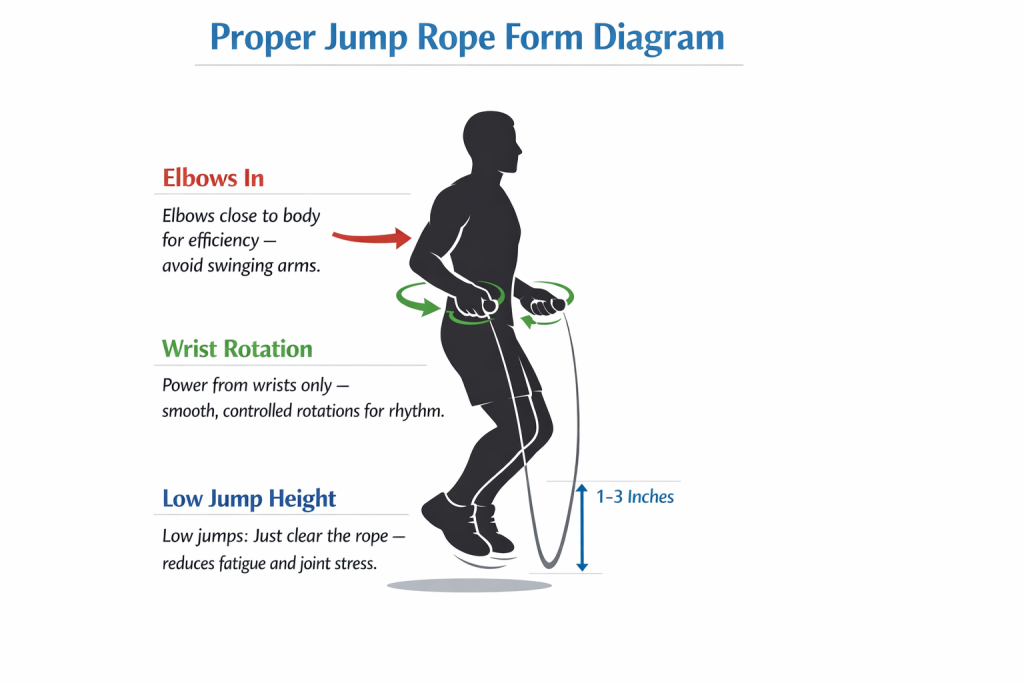
• When you’re jumping, try not to go too high. It can waste a lot of energy and put extra stress on your body. Instead, focus on keeping your jumps low and efficient.
• Also, be mindful of your shoulders. If your arms are flailing around, you’re not just wasting energy; you’re also losing your form. Keep your elbows tucked in.
• And don’t forget about your gaze – looking down can throw off your balance and curve your spine. Find a spot on the wall in front of you to keep your eyes on while you jump.
Having the right tools can really make a difference in optimizing your system. After looking into various product specifications and user feedback, I’ve put together my top recommendations that cater to different needs and budgets.
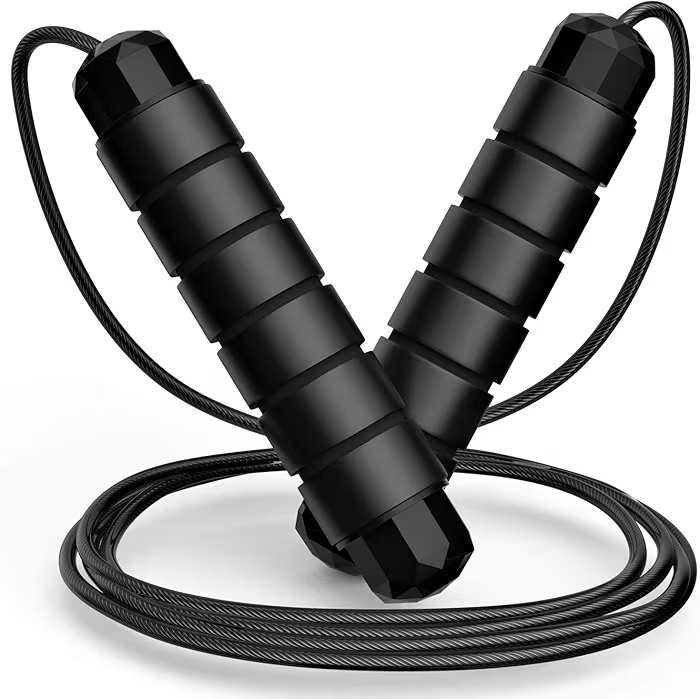
• Type: Speed Rope (PVC cable with ball bearings)
• Length: Adjustable (Amazon)
• Weight: Light
• Best For: Beginners 👟
• The rope functions properly because its ball bearing system enables smooth rotation which allows users to maintain their rhythm without straining against the rope. The product lacks the visual feedback that a beaded rope provides yet it remains suitable for beginners because its tangle-free cable system and adjustable length work effectively without requiring additional setup.
• The product serves as an excellent starting point for users who need a basic product that combines durability with simple operation to develop their coordination and timing skills.
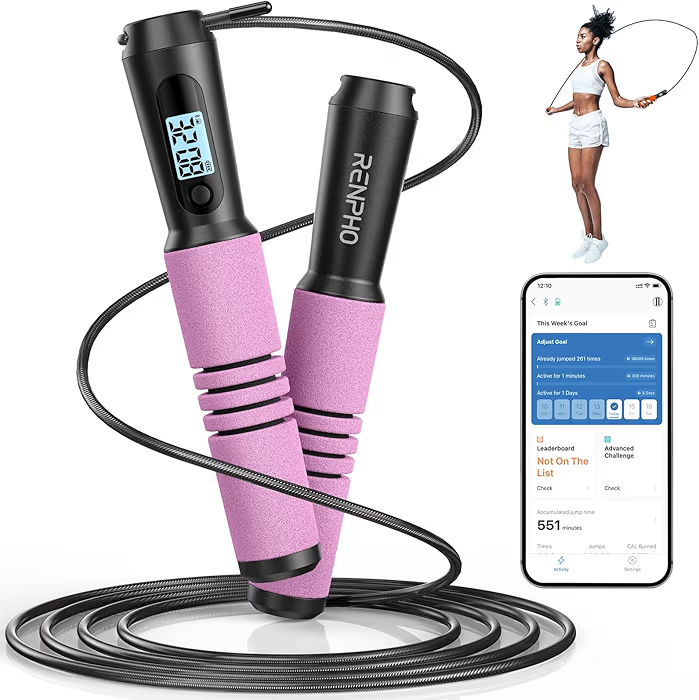
• Type: Speed Rope (Ball Bearing System)
• Length: Adjustable (Amazon)
• Weight: Very Light
• Best For: HIIT & Fat Burn ⚡
• The ball bearings really make a difference, allowing for fast, smooth rotations that are crucial during high-intensity interval training. Plus, the lightweight design helps reduce fatigue in your upper body, so you can really focus on improving your foot speed and burning those calories. Honestly, this piece of equipment is a powerhouse for the HIIT routines I’ve designed.
• Type: Weighted Rope (1LB total)
• Length: Adjustable (Amazon)
• Best For: Advanced Users & Strength 💪
• The reasons for the system’s suitability become clear through its evaluation. The addition of resistance to training jump ropes generates a different experience for athletes. The 1LB rope requires users to maintain shoulder and arm and core strength during all activities. The activity becomes complete bodywork because it requires more than just cardiovascular exercise.
The additional weight causes a small decrease in rope speed which improves control and timing but results in higher muscle requirements. You develop three skills through one training session which includes rhythm and power and endurance.
| Model | Price | Type | Length | Weight | Best For |
| Loocio | $10 | Beaded | Adjustable to 9ft | Light | Beginners 👟 |
| RENPHO | $15.99 | Speed | Adjustable to 9ft | Very Light | HIIT & Speed ⚡ |
| Redify | $25.99 | Weighted | Adjustable | 1 LB | Strength & Control 💪 |
A good system goes beyond just random intervals. Let’s explore how to set up a well-structured session that covers everything you need.
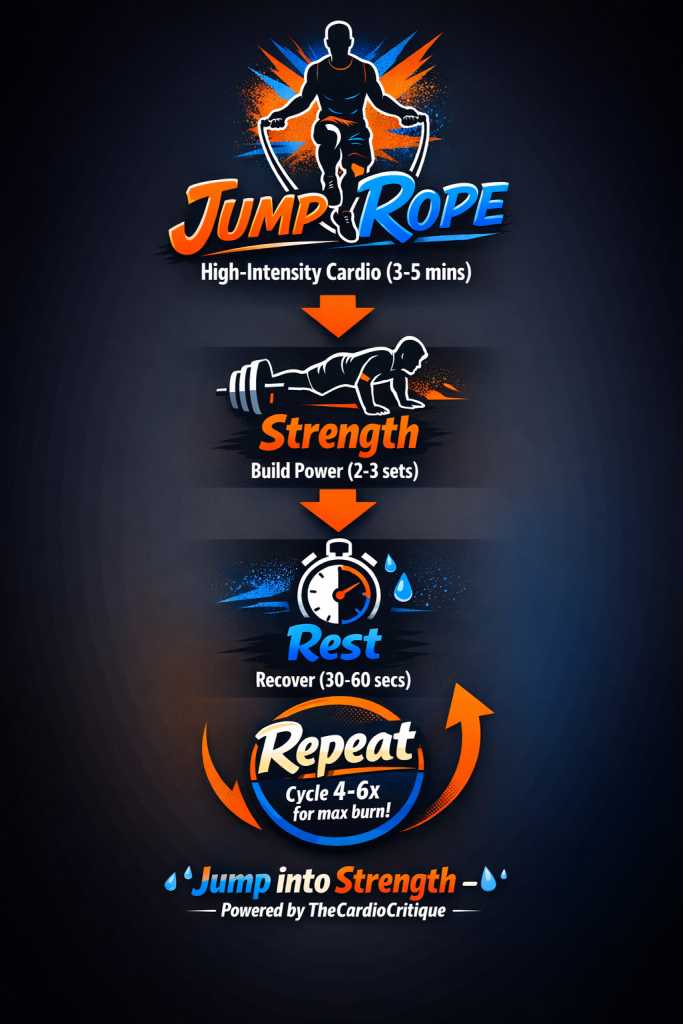
This workout is designed to engage your entire body and boost your metabolism. Just grab your RENPHO speed rope and you’re all set to get started!
• Jump Rope (High Intensity): 1 minute
• Bodyweight Squats: 15 reps
• Push-Ups: 10 reps (or from knees)
• Rest: 30 seconds
• Repeat: for 3-5 rounds.
Consistency beats intensity every time.
• Monday: HIIT Jump Rope Routine (20 mins)
• Wednesday: Steady-State Jumping (25 mins)
• Friday: Skill-Based Session (practice double-unders, etc.) (15 mins)
• Saturday: (Optional) Active Recovery – Light steady-state or another form of cardio.
Let’s take a moment to look at why this system works so well. The comparison between Harvard and ACE isn’t just a neat tidbit; it really highlights what makes this system valuable. By burning calories at a rate similar to running but in less time, you’ve got an incredibly effective model for fat loss. When you add in those HIIT protocols backed by PubMed, it creates a fantastic synergy that boosts your results for the time you put in. My job is to weave together these different elements – the basic calorie burn, the HIIT kick and the gradual increase in intensity through skills and weights – into a smooth, scalable system that gives you reliable outcomes.
• So, is jumping rope actually better than running? Well, it really depends on what you’re trying to achieve. If you’re looking for something that’s time-efficient, easy to carry around and gives you a full-body workout, then jumping rope might be the way to go. On the other hand, if you want a lower-impact option, especially on softer surfaces or if you’re into long-distance endurance, running could be your best bet. For many people who are trying to lose fat and squeeze in cardio while juggling a busy schedule, jumping rope tends to be the more effective choice.
• If you’re wondering how long you should jump rope to shed some pounds, the answer really comes down to consistency. You don’t need to spend hours working out. In fact, short and intense sessions of about 15 to 20 minutes, done around 3 to 5 times a week, can be incredibly effective for weight loss. These workouts really ramp up calorie burning and can keep your metabolism working hard even after you’re done. Plus, this approach is much easier to stick to than trying to carve out time for longer exercise sessions.
• Wondering if jump rope is tough on your knees? Well, as long as you’re using the right technique and jumping on a softer surface-like an exercise mat or a wooden floor – you should be just fine. In fact, the controlled impact can actually help to build up the muscles and tendons that support your knee joint. But if you have any existing knee issues, it’s a good idea to check in with a physical therapist first.
• I wouldn’t recommend starting with weighted ropes if you’re a beginner. They can be tough to handle because they need more control and strength. This could lead to bad form and even strain your muscles. It’s better to start off with a light beaded rope or a speed rope to really nail down the basics first
All recommendations are based on trusted research and expert guidance. Jump rope calorie burn and intensity come from ACE and MedicalNewsToday. Health and strength benefits are supported by Verywell Fit and Mayo Clinic, while HIIT performance data references PubMed studies. Workouts are designed to be safe, scalable, and efficient for all fitness levels.
Key sources: Verywell Fit, Mayo Clinic, MedicalNewsToday, PubMed.
When you look at rope jumping from a systems architecture standpoint, it really shines. It’s incredibly time-efficient, affordable, portable and scalable, plus you can easily track your progress. Honestly, it’s one of the best low-cost, high-impact cardio workouts out there. Whether you’re aiming to shed some pounds, build stamina or just need a workout that seamlessly fits into your life, rope jumping is the perfect solution right in front of you.


